Inclusive Education in Practice: How EIBC Kibeho Is Expanding Learning Opportunities for Children with Visual Impairments
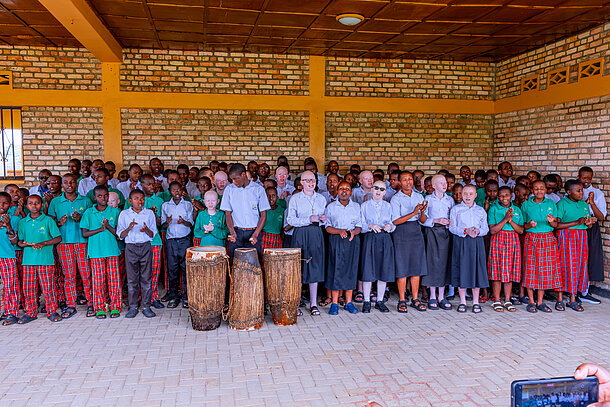
For children with visual impairments, access to quality education means more than being enrolled in school. It also requires accessible learning materials, adapted teaching methods, assistive technologies and an environment that enables every learner to participate and develop their potential.
At the Educational Institute for Blind Children (EIBC) in Kibeho, Nyaruguru District, these principles are reflected in the way learners access textbooks, participate in classroom activities and develop skills for independent living.
The institution serves 100 learners with visual impairments, from primary to secondary education, providing specialised support that enables them to pursue their studies and prepare for further education and employment.
The school's work reflects Rwanda's broader commitment to inclusive education, which seeks to ensure that children with disabilities have equitable opportunities to access, participate in and complete their education.
For the Ministry of Education, this commitment goes beyond increasing enrolment. It also involves addressing the barriers that prevent learners with disabilities from participating effectively in teaching and learning.
These include inaccessible infrastructure, limited specialised learning materials, insufficient assistive technologies and the need for teachers with appropriate skills to support learners with different disabilities.
Making the national curriculum accessible
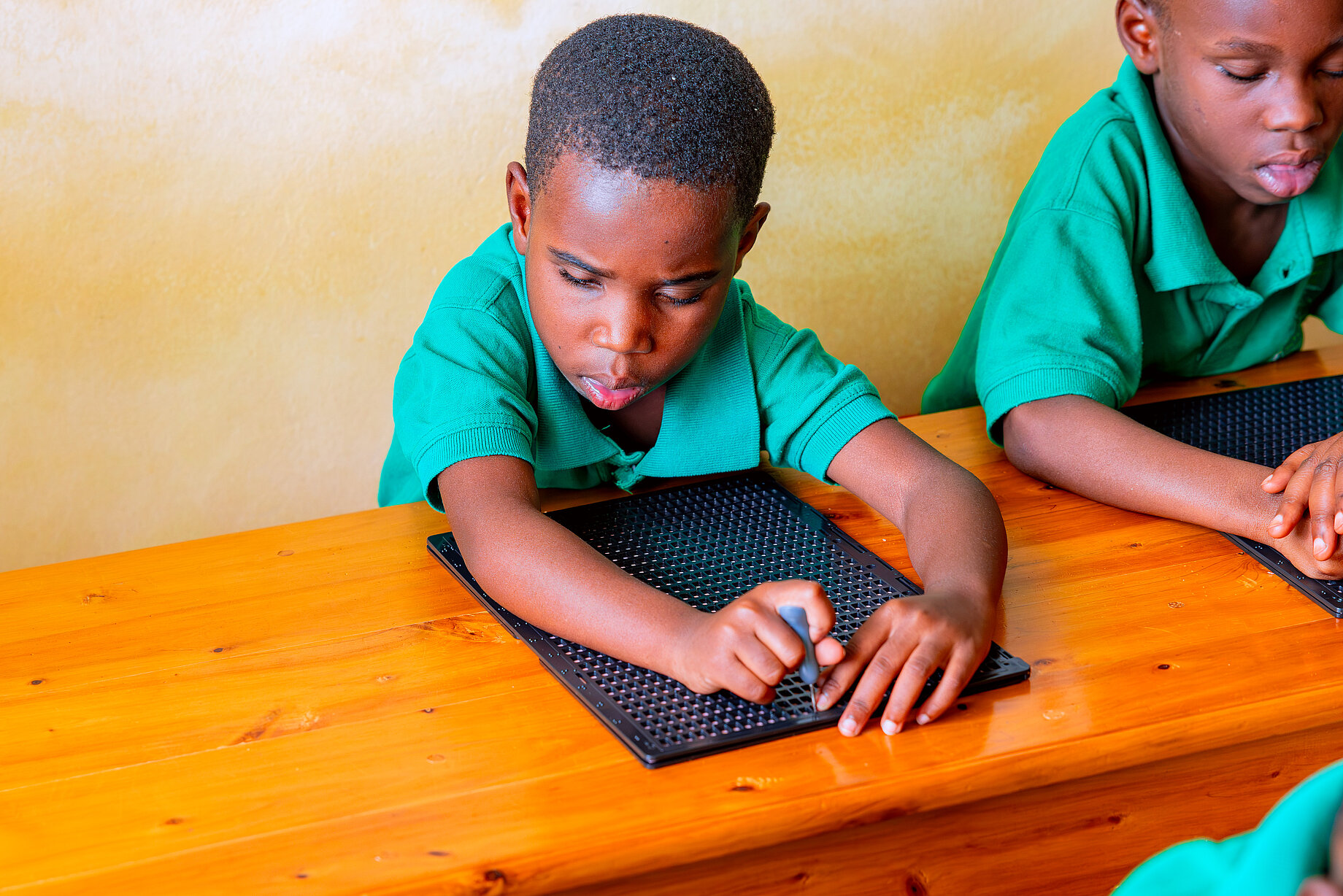
A central part of EIBC's approach is ensuring that visual impairment does not prevent learners from accessing the national curriculum.
Students use the same textbooks as their sighted peers, with learning materials transcribed into Braille, a system of raised dots that enables people with visual impairments to read through touch.
Producing these materials requires considerable time, specialised equipment and financial resources. A standard 327-page textbook, for example, can be converted into approximately nine Braille volumes.
The school also has Rwanda's first Braille library, where learners access textbooks transcribed by the Rwanda Basic Education Board (REB), alongside other reading materials.
The library provides opportunities for students to read, study and access information independently, while supporting their participation in the national education system.
The school's Director, Gumińska, explained that supporting children with visual impairments goes beyond providing formal education. It also means helping them become confident, independent and responsible members of society.
“The mission of our congregation is to serve blind children and people more generally. At our institution, we strongly believe in inclusive education. We believe that every child with a disability, including blind children, can achieve success, grow and dream of a bright future, not only for themselves but also for the wider Rwandan society,” Gumińska said.
Assistive technology opens new opportunities
Beyond Braille materials, assistive technology is increasingly important in enabling learners with visual impairments to access information, communicate and develop practical skills.
At EIBC, students use devices such as Orbit, which allows them to produce and access written information using Braille technology.
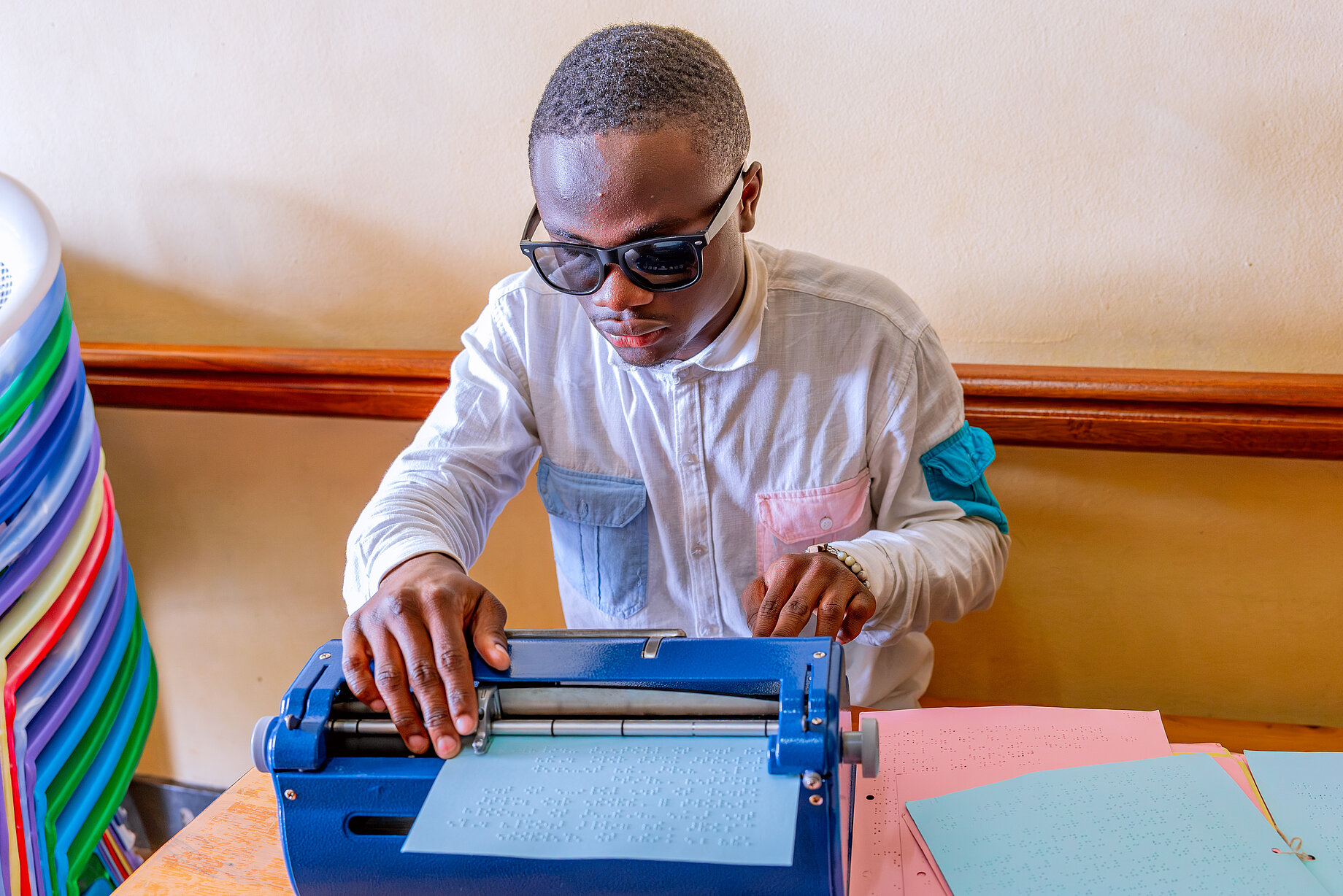
Jean de Dieu Niyonzima, a Senior Six student studying the LFK combination, explained how such devices help learners prepare important documents, including CVs and application letters.
“These tools help us to write documents that we will need when applying for university and jobs. However, they are not enough. We wish that every blind student could have his or her own tool,” he said.
His experience highlights both the opportunities created by assistive technology and the need to expand access to these tools.
For learners with visual impairments, assistive devices are not simply additional educational resources. They can be essential tools for accessing information, completing assignments, communicating independently and preparing for higher education and employment.
Strengthening support through education policy and financing
The Ministry of Education recognises that providing equitable learning opportunities requires different levels of support depending on learners' needs.
This principle is reflected in the financing of education for learners with disabilities, including additional resources intended to help schools provide specialised learning materials and appropriate support.
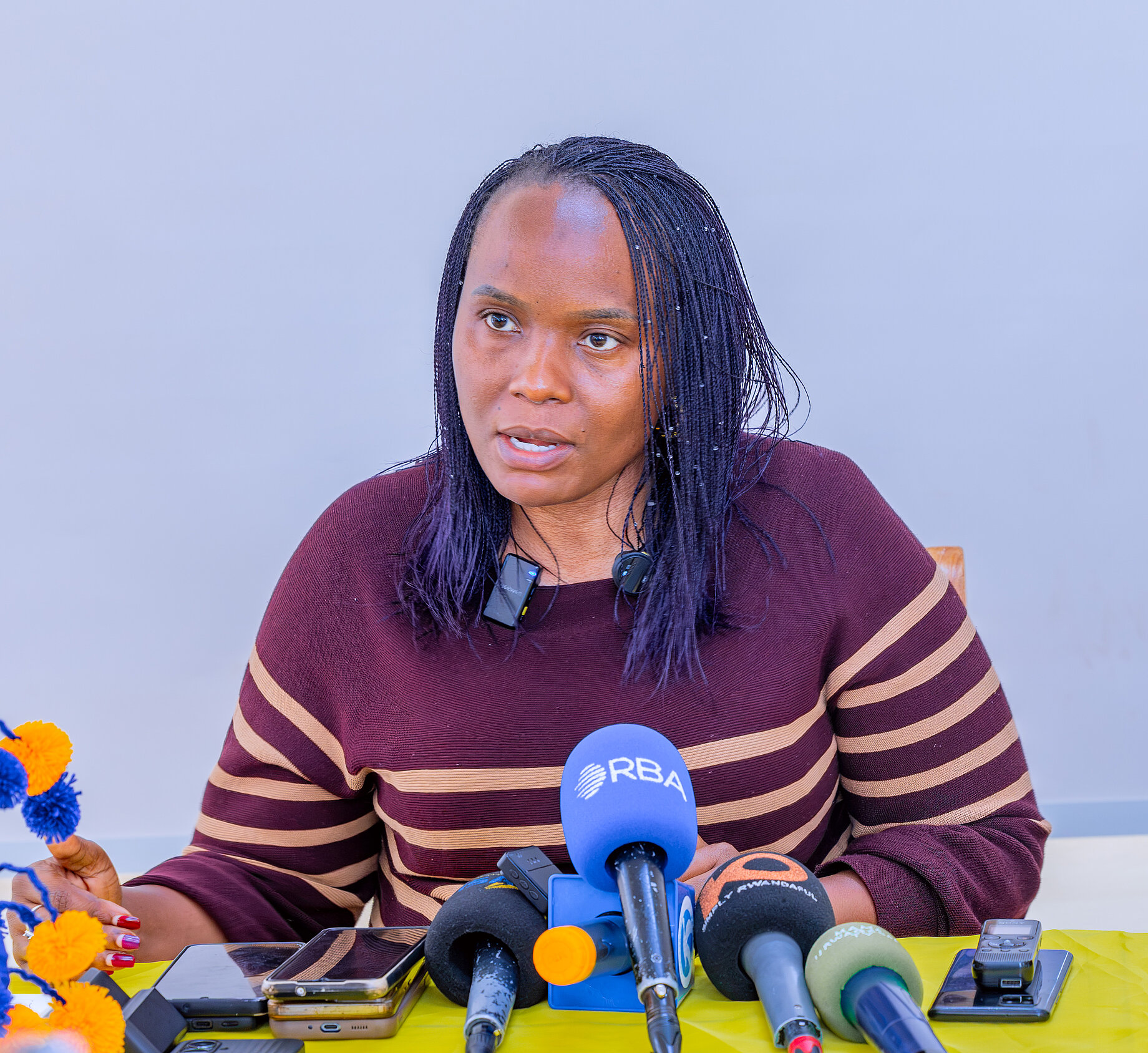
The Deputy Director General of the Rwanda Basic Education Board (REB), Dr Flora Mutezigaju, explained that learners with disabilities receive capitation grants equivalent to three times the amount allocated to learners without disabilities.
This additional financing recognises that ensuring equitable access to education can involve higher costs, including adapted learning materials, specialised equipment and other forms of educational support.
Dr Mutezigaju acknowledged that assistive technologies require significant financial resources but emphasised their importance in enabling learners with disabilities to participate effectively in education.
She noted that software which converts written information into speech remains among the priorities in education budgeting.
“A blind student cannot manage without software that produces sound. This technology is part of their daily lives, and we prioritise it in our budget,” she said.
She also highlighted the potential of Artificial Intelligence (AI) to reduce the cost of some assistive technologies and expand access to digital learning resources.
While such technologies offer new opportunities, ensuring that they are available to all learners who need them remains an important area for continued investment.
From access to participation and achievement
Rwanda's approach to inclusive education increasingly emphasises not only bringing learners with disabilities into the education system, but also ensuring that they receive the support needed to learn, progress and succeed.
This requires attention to accessible school infrastructure, teacher preparation, appropriate learning materials, early identification of learning needs and the availability of specialised support.
It also means recognising that learners with disabilities have the same aspirations as other students, including progressing to higher education, acquiring professional skills and participating fully in society.
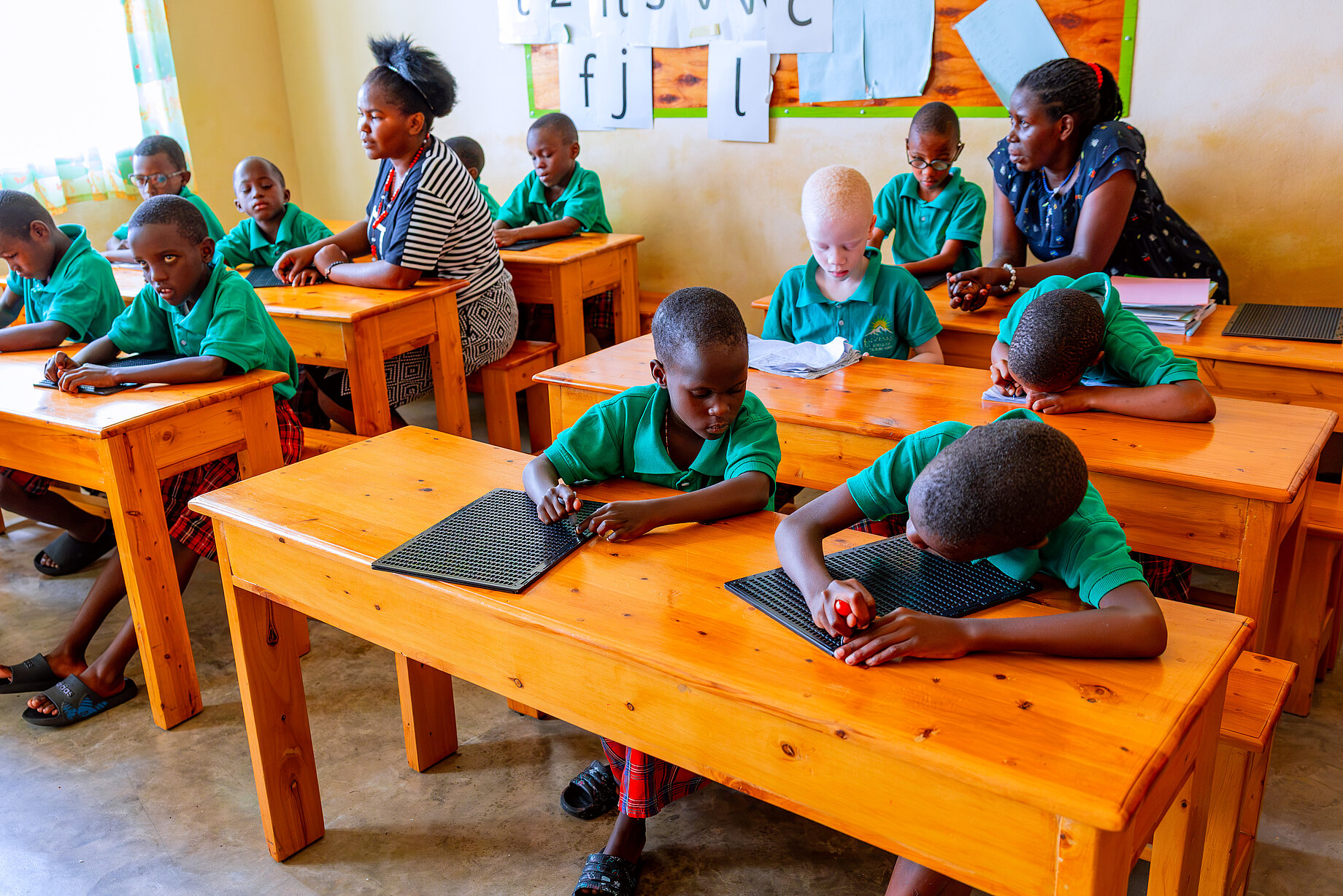
At EIBC Kibeho, the combination of Braille textbooks, adapted teaching approaches, assistive technologies and support for independent living demonstrates how these principles can be translated into practical learning opportunities.
The experience of students such as Jean de Dieu Niyonzima also shows why inclusive education must extend beyond the classroom. Learners need the tools and competencies to navigate further education, employment and everyday life with greater independence.
Through continued investment in inclusive education, the Ministry of Education, working through REB and other education institutions and partners, is strengthening efforts to ensure that disability does not become a barrier to learning or achieving one's aspirations.
The objective is an education system in which every learner has the opportunity not only to attend school, but also to participate meaningfully, develop their abilities and succeed.
Topics
Rwanda Polytechnic Strengthens Advanced Technical Skills Training to Meet Labour Market Needs
Rwanda Polytechnic (RP) is strengthening practical training, industry partnerships and skills development to prepare graduates for employment,…
TTC Reforms to Strengthen Teacher Professionalism, Digital Skills and Classroom Readiness
Rwanda's ongoing reform of Teacher Training Colleges (TTCs), which extends teacher education programmes from three to five years, is designed to…
Inclusive Education in Practice: How EIBC Kibeho Is Expanding Learning Opportunities for Children with Visual Impairments
For children with visual impairments, access to quality education means more than being enrolled in school. It also requires accessible learning…
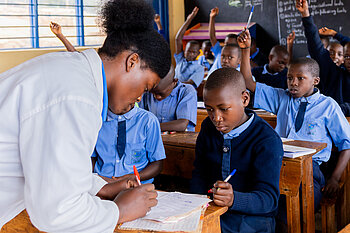
New Classrooms and sanitation facilities to improve learning conditions
The Government of Rwanda, through the Ministry of Education, in partnership with UNICEF, has completed 313 new classrooms and 324 toilet facilities…
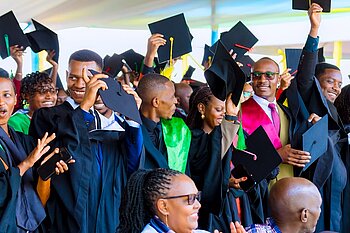
University of Rwanda Celebrates 4,953 Graduates at Its 12th Graduation Ceremony at the College of Education, Rukara Campus
The University of Rwanda (UR) celebrates the graduation of 4,953 students from its seven colleges at a ceremony taking place at Rukara Campus in…
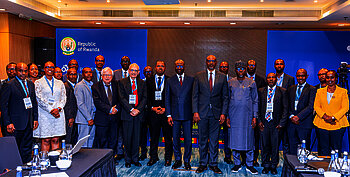
PASET Governing Council Meets in Kigali to Strengthen Africa’s Scientific and Technological Capacity
The Partnership for Skills in Applied Sciences, Engineering and Technology (PASET) has convened its Governing Council meeting in Kigali, bringing…
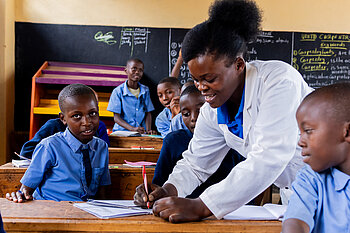
Minister of Education engages head teachers nationwide to strengthen school leadership and improve education quality
The Minister of Education, Joseph Nsengimana, is holding a series of meetings with head teachers across the country to discuss ongoing education…
The Ministry of education introduces new reforms to strengthen teaching, learning and student development
The Ministry of Education is introducing a series of reforms designed to improve the quality of education, strengthen the teaching profession and…

MINEDUC–World Bank partnership transforms Rubengera TTC into a modern teacher training hub
A partnership between the Ministry of Education (MINEDUC) and the World Bank has transformed Rubengera Teacher Training College in Karongi District…
